

Read our market review and find out all about our theme of the week in MyStratWeekly and its podcast with our experts Axel Botte, Aline Goupil-Raguénès and Zouhoure Bousbih.
Listen to podcast (in French only)
(Listen to) Axel Botte’s and Zouhoure Bousbih’s podcast:
- Review of the week – Weak employment report but activity remains well-oriented;
- Theme – Brazil’s elections: High Stakes for Beijing, Washington and the Amazon.
Podcast slides (in French only)
Download the Podcast slides (in French only)Topic of the week: Brazil’s Elections: High Stakes for Beijing, Washington and the Amazon
- Brazil’s upcoming presidential election is set to attract scrutiny from global investors, as its ramifications extend well beyond domestic politics and could reshape key geopolitical and economic dynamics;
- China, now Brazil’s leading trading partner and the primary destination for its outbound investment, has developed major strategic interests in Latin America’s largest economy;
- Washington, meanwhile, is seeking to deepen its influence with an indispensable partner in securing access to critical minerals, making Brazil a cornerstone of its Western Hemisphere strategy;
- The future of the Amazon, a global common good, represents another pivotal issue in the election. The trajectory of deforestation will have far-reaching consequences for climate change mitigation, biodiversity preservation and environmental security.
Brazil’s Elections: High Stakes for Beijing, Washington and the Amazon
Some 158 million Brazilians went to the polls on Sunday for the first round of the country’s general election. With seven of Latin America’s twelve nations having shifted to the far right in recent years, Brazil has emerged as the region’s last major bulwark against the administration of D. Trump, which has openly endorsed the son of former president Jair Bolsonaro, the far-right candidate. The vote is therefore a defining moment, pitting two sharply contrasting geopolitical visions against one another. As Latin America’s largest economy and foremost regional power, Brazil now stands at the crossroads of geopolitical, economic and climate challenges.
Brazil: A Key Pillar of U.S. National Security Strategy in the Western Hemisphere
The intensifying technological rivalry between the United States and China has elevated Brazil to a pivotal position in Washington’s national security strategy. Beijing’s growing influence across Latin America is increasingly viewed by U.S. policymakers through the lens of national security, while both powers are competing for access to Brazil’s critical mineral resources, which are essential to the development of advanced technologies, particularly artificial intelligence.
Brazil’s Niobium: A Strategic and Technological Imperative for Washington
According to Brazil’s National Mining Agency, the country holds the world’s second-largest, rare-earth reserves, estimated at 11 million metric tons, behind only China. These minerals are indispensable to produce permanent magnets, electric motors and precision-guided weapons.
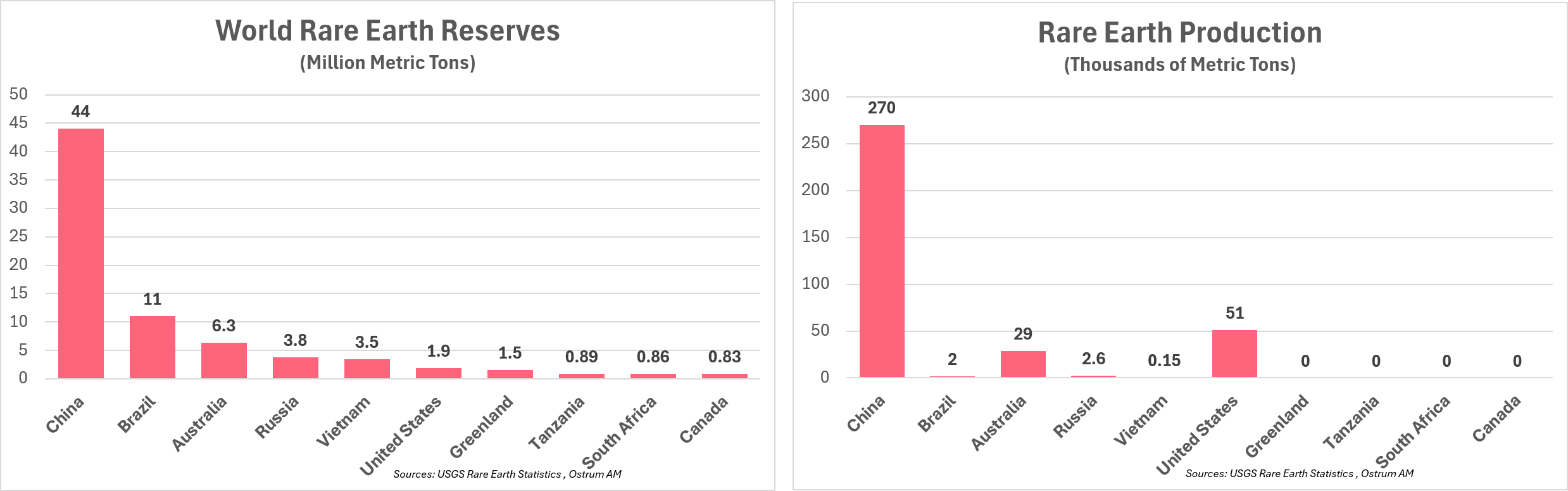
Despite its vast resource base, Brazil produced only around 2,000 metric tons of rare earths in 2025, highlighting the significant untapped potential of the sector and the strategic opportunity it represents for Washington’s efforts to diversify critical mineral supply chains.
Yet Brazil’s importance to U.S. national security extends beyond rare earths. What makes Brasília particularly strategic is its dominance in niobium, a critical mineral used in aerospace, defense applications and advanced semiconductors.
Brazil accounts for more than 90% of global niobium reserves and production, giving it a near-monopoly over a resource that is vital to the U.S. defense industrial base (see accompanying chart).
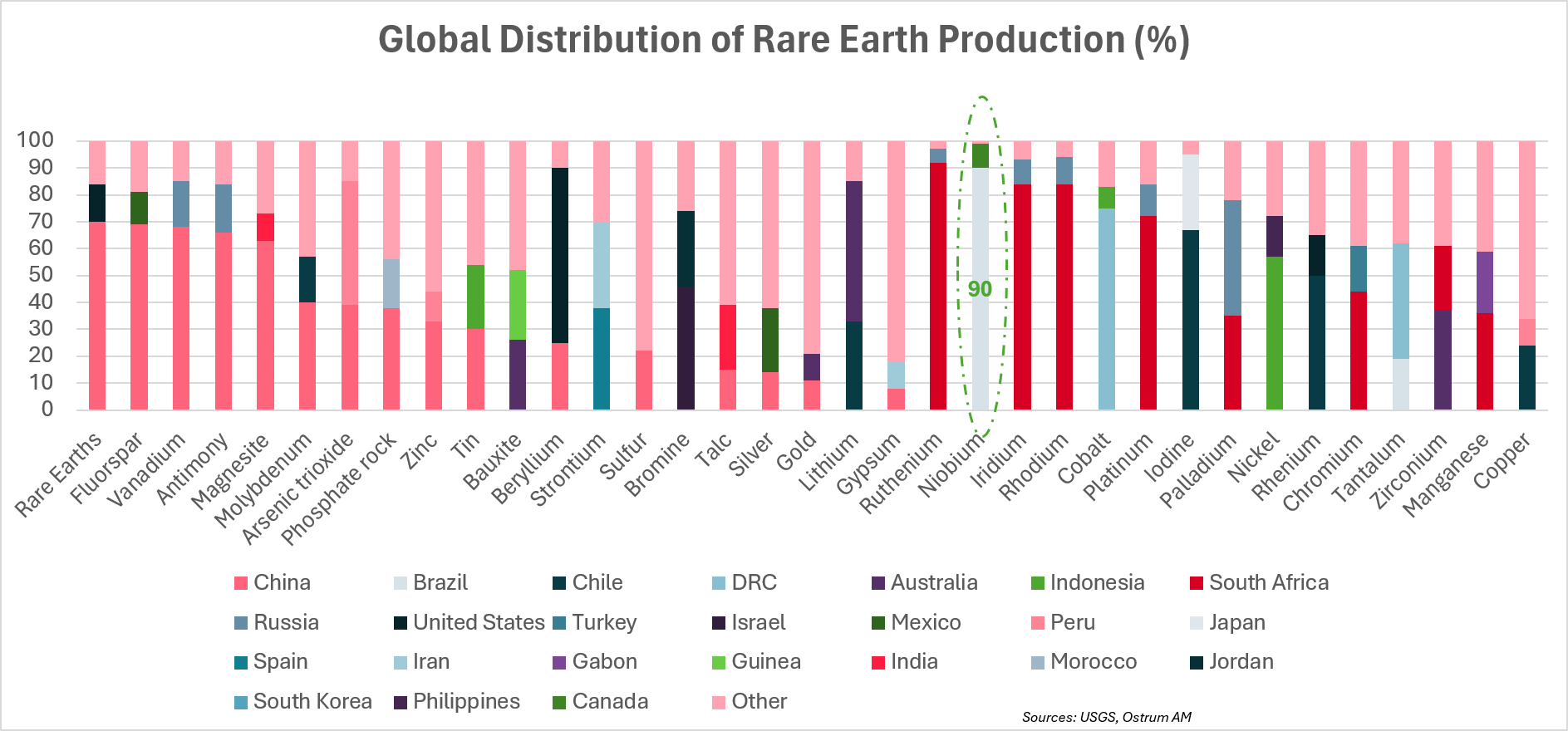
The United States remains fully dependent on imports of niobium from Brazil and Canada. Meanwhile, China has secured a significant foothold in Brazil’s niobium sector, controlling nearly 26% of production through strategic investments in the Brazilian mining company CBMM dating back to 2011, as well as through acquisitions of mining assets.
The Political Stakes of Brazil’s Election
These presidential elections are of critical importance to Washington as it seeks to reduce its dependence on rare-earth supply chains dominated by China.
The White House has openly expressed support for Flávio Bolsonaro, the son of former president Jair Bolsonaro and the far-right candidate. In an unprecedented move, Washington even imposed financial and diplomatic sanctions on Alexandre de Moraes, a Supreme Court justice overseeing several investigations involving Jair Bolsonaro. Those sanctions were ultimately lifted in December 2025.
In July, the U.S. administration once again sought to influence the electoral landscape by raising tariffs to 25% on selected Brazilian imports. At the same time, it launched an investigation into Pix, Brazil’s widely used instant-payment system, alleging unfair practices. The platform’s remarkable success has increasingly drawn the attention of policymakers in Washington.
A victory for Washington’s preferred candidate could pave the way for closer strategic cooperation and help bring Brazil more firmly back into the U.S. sphere of influence. By contrast, a Lula presidency could further strengthen China’s economic and geopolitical footprint across Latin America.
China: An Indispensable Economic and Financial Partner for Brazil
China Has Become Brazil’s Leading Trading Partner
Since 2009, China has been Brazil’s largest trading partner, accounting for more than 25% of the country’s total trade, as illustrated in the accompanying chart.
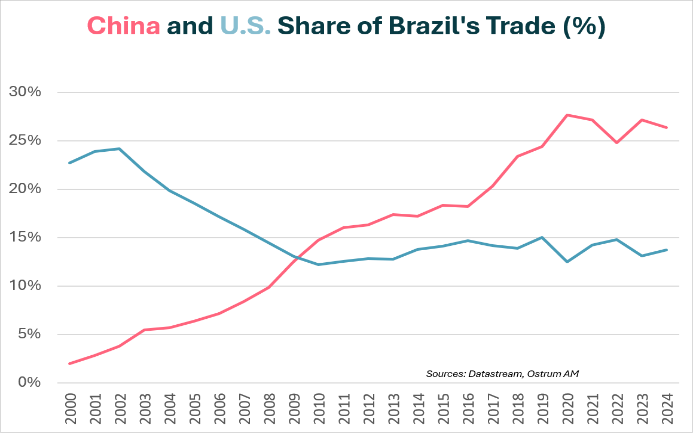
By contrast, the United States’ share of Brazil’s trade has fallen to just 13%, its lowest level since 1997.
Brazil’s exports to China are heavily concentrated in soybeans, iron ore and crude oil, reflecting the complementary nature of the two economies. Yet the relationship between Brasília and Beijing extends well beyond commodity trade and has increasingly been driven by investment flows.
The Growing Role of Chinese Investment
According to the 2025 report published by the Brazil-China Business Council (CEBC), Brazil has emerged as the leading destination for Chinese outbound investment, surpassing the United States.
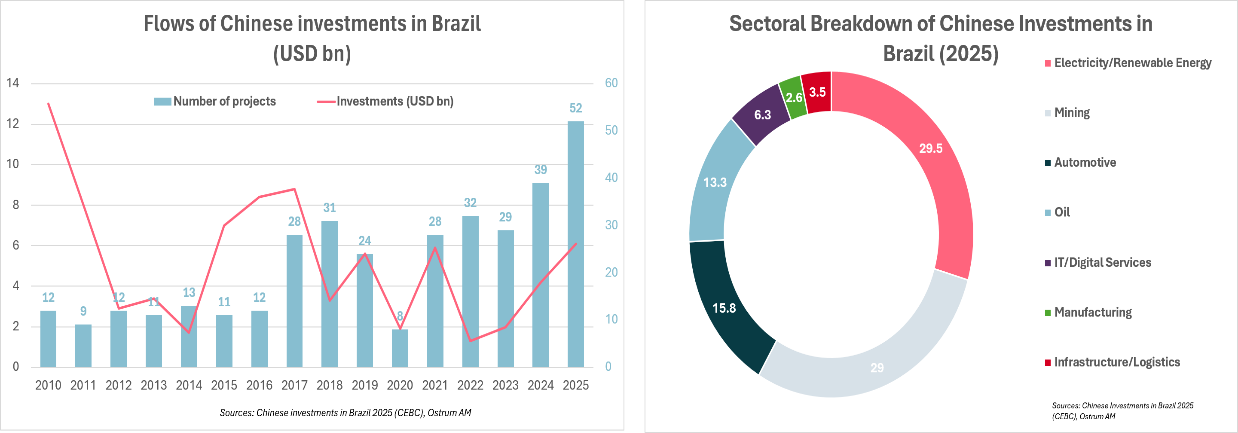
Chinese investment flows into Brazil reached USD 6.1 billion in 2025, their highest level since 2017, representing 10.9% of China’s total overseas investment. Chinese companies invested in 52 projects during the year, a historic record and the highest number ever recorded in a single year.
These investments have been concentrated in renewable power generation (29.5%), mining (29.0%) and the automotive sector, particularly electric vehicles (15.8%), as shown in the accompanying chart.
This growing economic footprint has strengthened Brazil’s strategic importance for Beijing and helps explain why the presidential election is being closely watched in both China and the United States.
Brazil’s Strategic Role in the Internationalization of the Renminbi
Beyond commodity trade, Beijing is seeking to integrate Brazil more deeply into the renminbi’s international ecosystem through local-currency trade settlement mechanisms, direct investment and financial infrastructure initiatives.
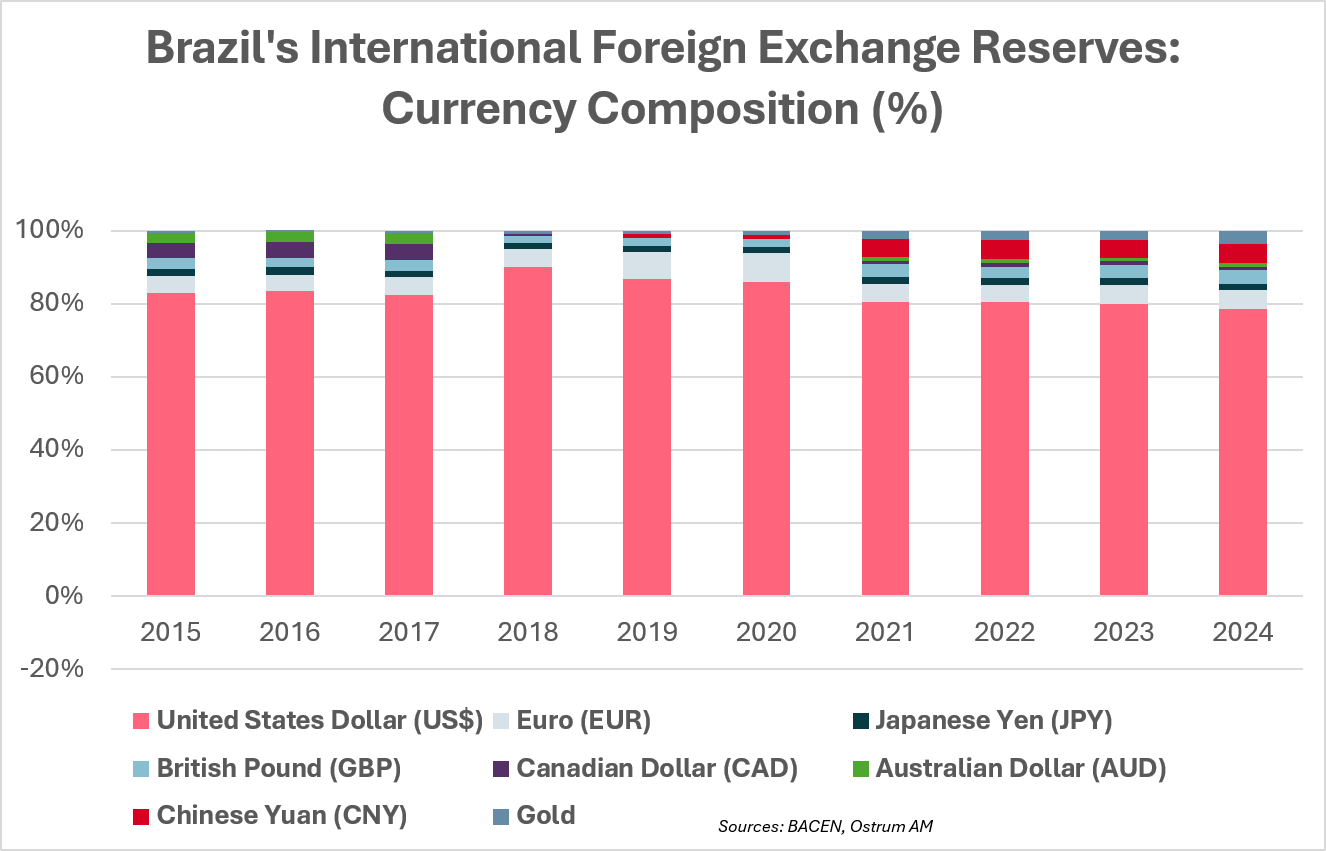
Since 2023, China and Brazil have established arrangements allowing companies to settle transactions directly in renminbi (RMB) and Brazilian reais (BRL), reducing their reliance on the U.S. dollar. The two countries have also signed agreements to develop a renminbi clearing system in Brazil, facilitating cross-border transactions and strengthening financial ties.
While the U.S. dollar remains Brazil’s dominant reserve currency, accounting for more than 80% of the country’s foreign-exchange reserves, the renminbi’s share has increased fivefold, rising from around 1% in 2020 to more than 5% in 2024. This trend reflects the deepening economic relationship between the two countries.
Brazil also plans to issue RMB-denominated Panda bonds worth CNY 5 billion (approximately USD 750 million), becoming the first Latin American country to access China’s onshore bond market.
Although modest in size relative to Brazil’s financing needs, the transaction carries considerable symbolic and political significance. It could pave the way for Brazilian companies to tap the Chinese domestic bond market, diversify their funding sources and benefit from potentially more attractive financing conditions.
Taken together, these developments underscore Brazil’s growing importance in China’s long-term strategic and financial ambitions, making the outcome of the presidential election a matter of considerable interest for Beijing as well as Washington.
The Amazon: A Global Commons at the Heart of Geopolitical Rivalries
A Global Climate, Economic and Health Imperative
The Amazon rainforest is one of the world’s largest carbon sinks and plays a vital role in the fight against climate change. Its forests and waterways are also essential to South America’s economic development. Up to 70% of the continent’s GDP is generated in regions that depend on water originating from the Amazon basin.
The rainforest is equally critical to modern medicine. Numerous treatments and vaccines have been derived from compounds found in wild plant species, and the U.S. National Cancer Institute has estimated that around 70% of plants used in cancer treatment are found exclusively in tropical forests.
The stakes of Brazil’s election therefore extend far beyond its borders. The future of Amazon is a matter of global public interest.
Lula vs. Bolsonaro: Two Competing Development Models
Since returning to office in 2023, President Lula has made the fight against deforestation a central policy priority, setting a target of achieving “zero deforestation” by 2030.
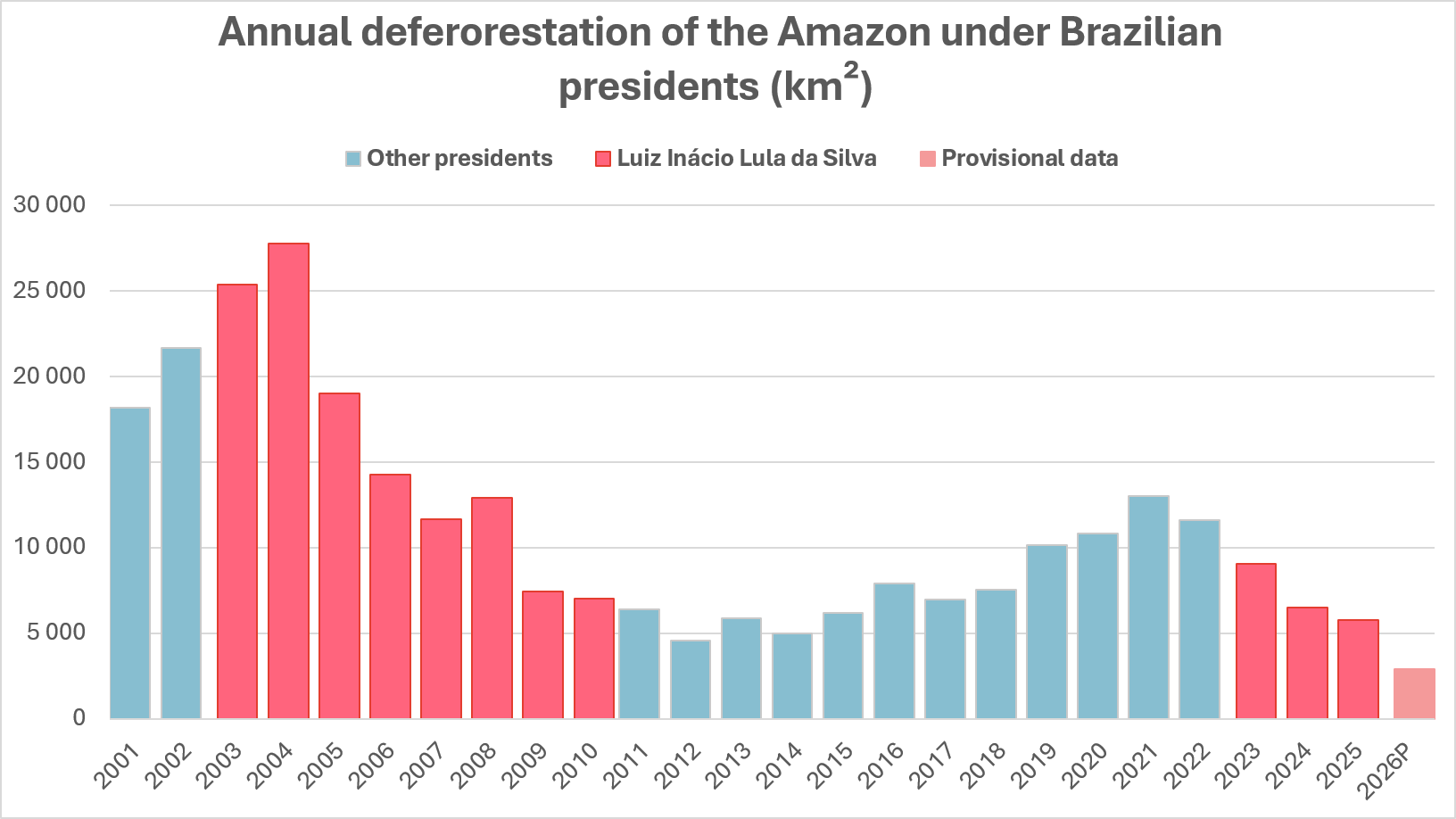
The results have been significant. Annual deforestation fell from 11,594 km² in 2022 to 5,731 km² in 2025, a decline of more than 50%. According to an analysis by Carbon Brief, at least 20,000 km² of Amazon rainforest have been preserved since 2023 thanks to stronger environmental policies.
The Bolsonaro camp, by contrast, advocates a more growth-oriented approach centred on large-scale agriculture, mining development and a relaxation of environmental regulations. These priorities broadly align with those of the D. Trump administration, which sees the election of its preferred candidate as an opportunity to expand the presence of U.S. companies in Brazil.
That said, the trajectory of Amazon deforestation will not be determined by the election outcome alone. Institutional and economic factors will remain equally important, including the future of the Amazon Soy Moratorium.
Beyond the Election: The Importance of the Soy Moratorium
Regardless of who wins the presidency, the future of the Amazon will also depend on the balance of power in Congress, developments in Brazil’s powerful agribusiness sector and the preservation of key environmental safeguards.
Among the most important is the Amazon Soy Moratorium, a voluntary agreement under which major traders commit not to purchase soybeans grown on land deforested after 2008. Any weakening or abandonment of this framework could encourage a new wave of land clearing across the rainforest.
China’s Amazon Paradox
China’s position on the Amazon reflects a fundamental contradiction. Officially, Beijing supports rainforest conservation and has committed to ambitious carbon-neutrality goals. Several major Chinese state-owned enterprises have also embraced sustainability targets.
In practice, however, China’s economic footprint has become an indirect driver of deforestation. To ensure food security, the country imports vast quantities of Brazilian soybeans to feed its pig herd, as well as growing volumes of Brazilian beef. This sustained demand has encouraged the continued expansion of agricultural land at the expense of forested areas.
China’s role is further amplified through infrastructure financing associated with the Belt and Road Initiative. While these projects support economic development and connectivity, they can also accelerate deforestation and open previously protected areas to economic activity, increasing pressure on biodiversity and fragile ecosystems.
As a result, China finds itself in a paradoxical position: publicly advocating environmental protection while remaining one of the key economic forces shaping the future of the Amazon.
Conclusion:
Brazil’s general election extends far beyond the realm of domestic politics. The outcome will not only shape the country’s diplomatic orientation amid intensifying U.S.-China rivalry, but also influence its position within global supply chains.
For Beijing, Brazil represents a strategic partner and a potential vehicle for the internationalization of the renminbi. For Washington, meanwhile, Brasília is increasingly viewed as a cornerstone of its Western Hemisphere security strategy, given its critical mineral resources, economic weight and regional influence.
The election also carries profound environmental implications. The progress achieved in recent years in curbing Amazon deforestation could either be consolidated or reversed, depending on the direction taken by the next administration.
Ultimately, the vote has the potential to redefine the triangular relationship between Beijing, Washington and Brasília for years to come. Its consequences may also extend far beyond geopolitics, shaping the future of one of the world’s most valuable global commons: the Amazon rainforest.
Zouhoure Bousbih
Chart of the week
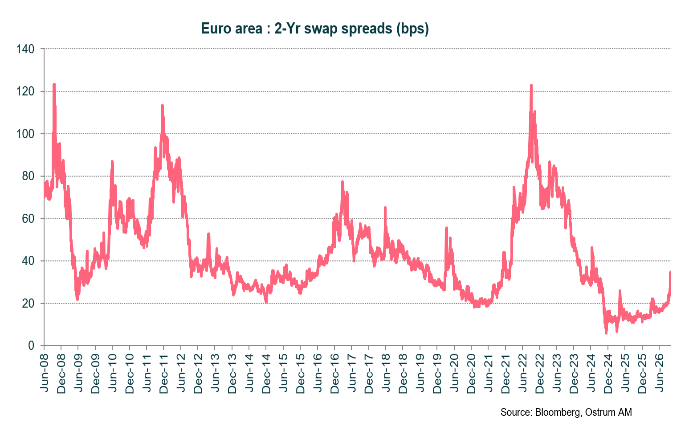
After a prolonged period of very low volatility, turbulence in sovereign debt markets is beginning to trigger reactions in swap spreads.
In the first days of October, a flight-to-safety dynamic generated buying of German debt, particularly at short maturities, contributing to a sharp widening of the swap spread.
This gap can be interpreted as an indicator of interbank risk, with banks holding OATs and other sovereign bonds coming under pressure. Bank CDS and equities have also deteriorated sharply in parallel with the tensions in sovereign spreads.
Figure of the week
100
The G7 and the International Energy Agency (IEA) have agreed to an emergency release of 100 million barrels of diesel and refined petroleum products in an effort to stabilize the market.
Market review: French OATs Adrift
- Euro area: inflation rises to 3.8% whilst core inflation hovers about 2.5%;
- U.S.: growth revised up to 2.2% in 2nd quarter as trade imbalances increase in August;
- Bonds: OAT spreads under pressure spurs flight to quality on Bunds;
- Swap spreads: 2-Yr swap spreads widening in response to pressure on OAT spreads.
Market review: French OATs Adrift
After a week of relative calm, a sharp widening of French sovereign spreads has triggered a broad-based wave of market distrust, dragging down all European government debt except for the German Bund, which has reclaimed its classic safe-haven status. Banking stocks are feeling the heat, while the US dollar remains firm. Technology shares, meanwhile, are showing resilience against the broader equity market downturn.
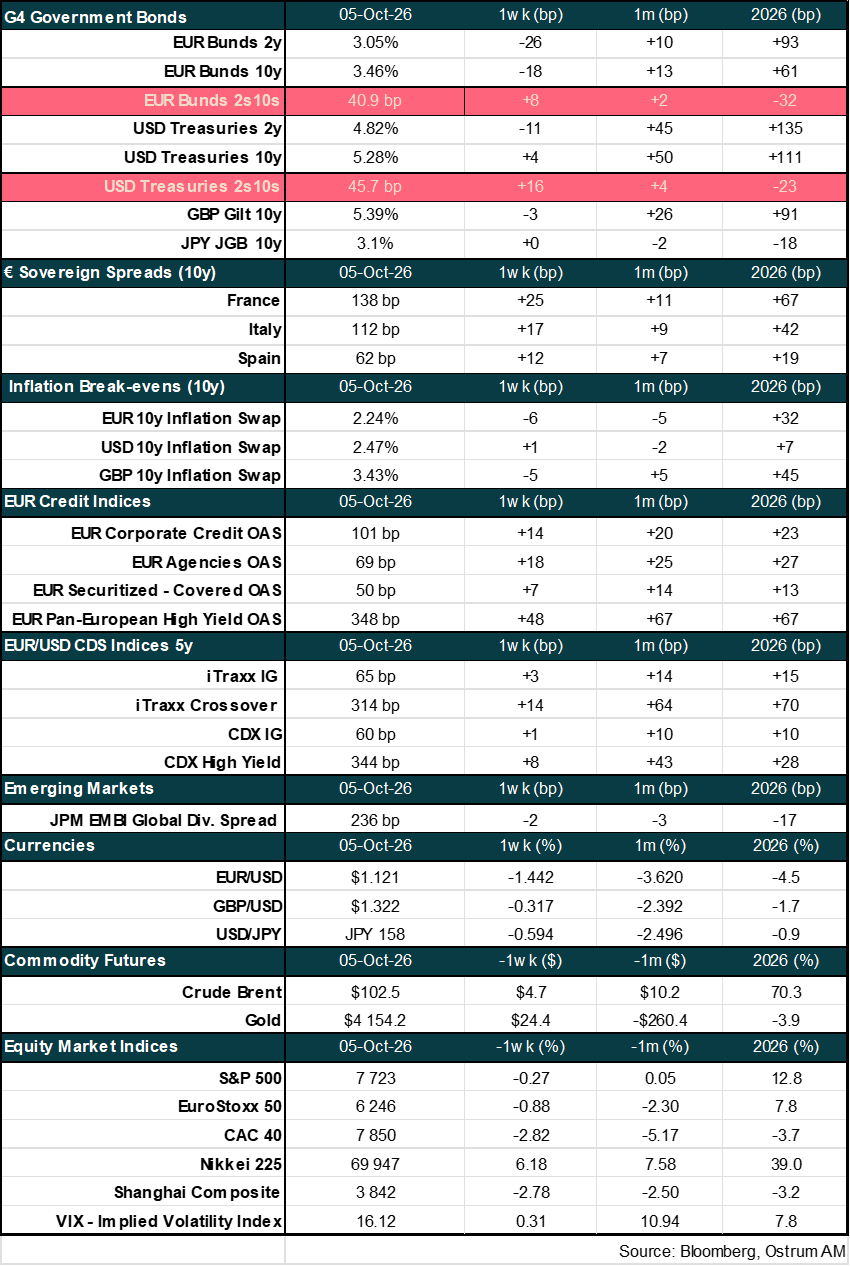
Tensions had been building steadily since August, but the sell-off accelerated dramatically last week. The 10-year French OAT spread has surged toward 150 basis points, pulling other sovereign bonds in its wake, whereas the Bund yield moved in the opposite direction, retreating toward 3.40%. Market participants are now shifting their focus toward a potential response from the European Central Bank. Risk assets are suffering on both sides of the Atlantic; in the US, the CCC high-yield credit segment has climbed back to its 2022 highs. The greenback has emerged as the preferred refuge, as rising real rates sap the appeal of gold.
In the US, second-quarter GDP growth was revised upward from 1.5% to 2.2%, bolstered by robust household spending on services. Business investment, fuelled by the artificial intelligence boom, remains the primary engine of demand. The overheating flagged by business surveys over recent months is now materialising through longer supplier delivery times, rising input prices (specifically metals), and a gaping trade deficit, which hit $132bn in August. Nonetheless, third-quarter growth is tracking close to 3%. In Europe, business surveys indicate a cyclical recovery, though this now risks being derailed by the surge in long-term rates. Headline inflation accelerated to 3.8% in September, driven by an 18.8% jump in energy prices, though core inflation (excluding volatile items) remained stable at 2.5% for the past year.
Across financial markets, aversion to French debt is deepening despite relatively successful bond auctions on Thursday. With 10-year OAT spreads hovering near 150 bps, old market reflexes have returned: the Bund yield fell by more than 20 bps, while the short-term Schatz dropped from over 3.30% back to 3%. Many investors are now looking to the ECB for a policy response. The strain on French debt is spilling over into other sovereign issuers, swap spreads, and high-yield corporate credit. French corporate debt remains under pressure. Meanwhile, the US 10-year Treasury note briefly breached the 5.30% threshold. This upward momentum eased somewhat following comments from New York Fed President John Williams, which lowered the perceived probability of a final rate hike at the end of October. Yield curve steepening is once again the dominant trend. In equity markets, volatility has picked up, with Europe's implied volatility index nearing 20%. Banking stocks are under pressure as sovereign debt strains feed directly into the sector. Energy and utilities are acting as defensive plays, while the AI theme is offering some relative protection. In the US, the upcoming corporate earnings season will act as the ultimate arbiter, but the S&P 500 is once again being buoyed by a narrow handful of mega-caps, while the equal-weighted index has been in decline since mid-August.
Axel Botte
Main market indicators
-

Axel Botte Head of markets strategy