

Read our market review and find out all about our theme of the week in MyStratWeekly and its podcast with our experts Axel Botte, Aline Goupil-Raguénès and Zouhoure Bousbih.
Listen to podcast (in French only)
(Listen to) Axel Botte’s and Zouhoure Bousbih’s’ podcast:
- Review of the week – The Fed raises its rate, the BoE maintains a precarious status quo, and the BoJ disappoints;
- Theme – Panda Bonds: is this the Renminbi’s “Dollar Moment”?
Podcast slides (in French only)
Download the Podcast slides (in French only)Topic of the week: Panda Bonds: Is This the Renminbi’s “Dollar Moment”?
- Much like the United States in the 1920s, China is now seeking to transform the renminbi from a trade settlement currency into an international financing currency;
- Panda and Dim Sum bonds represent key milestones in this new phase of renminbi internationalization;
- The rapid growth of the Panda bond market echoes the rise of the US dollar in the twentieth century: low renminbi funding costs, borrowers’ search for currency diversification, and increasing geopolitical fragmentation are all supporting this trend;
- China, however, is pursuing a different path, focusing on the development of a renminbi-centered financial ecosystem rather than on the full liberalization of its capital account, which could undermine domestic financial stability;
- If successful, this strategy could significantly advance the internationalization of the renminbi without requiring China to relinquish control over its financial system;
- This is precisely what distinguishes the renminbi’s “dollar moment” from the historical “dollar moment” itself.
Panda Bonds: Is This the Renminbi’s “Dollar Moment”?
Monetary history shows that the dominance of an international currency is never immutable. While sterling retained its status for decades thanks to powerful network effects, it was ultimately the development of deep and liquid US financial markets that enabled the dollar to emerge as the world’s leading international currency by 1929. Today, the renminbi is following a different path, yet with a fundamental similarity: China is seeking to transform the renminbi from merely a trade settlement currency into a financing and investment currency as well. Does the rise of the Panda bond market represent the renminbi’s equivalent of the dollar’s “moment” in the 1920s?
The Renminbi’s Internationalization Reaches a New Milestone
Initially Driven by Trade Settlement
The internationalization of the renminbi (RMB) was initially anchored in China’s external trade.
Beijing’s ambition is now to transform the yuan from a trade settlement currency into a global financing currency …
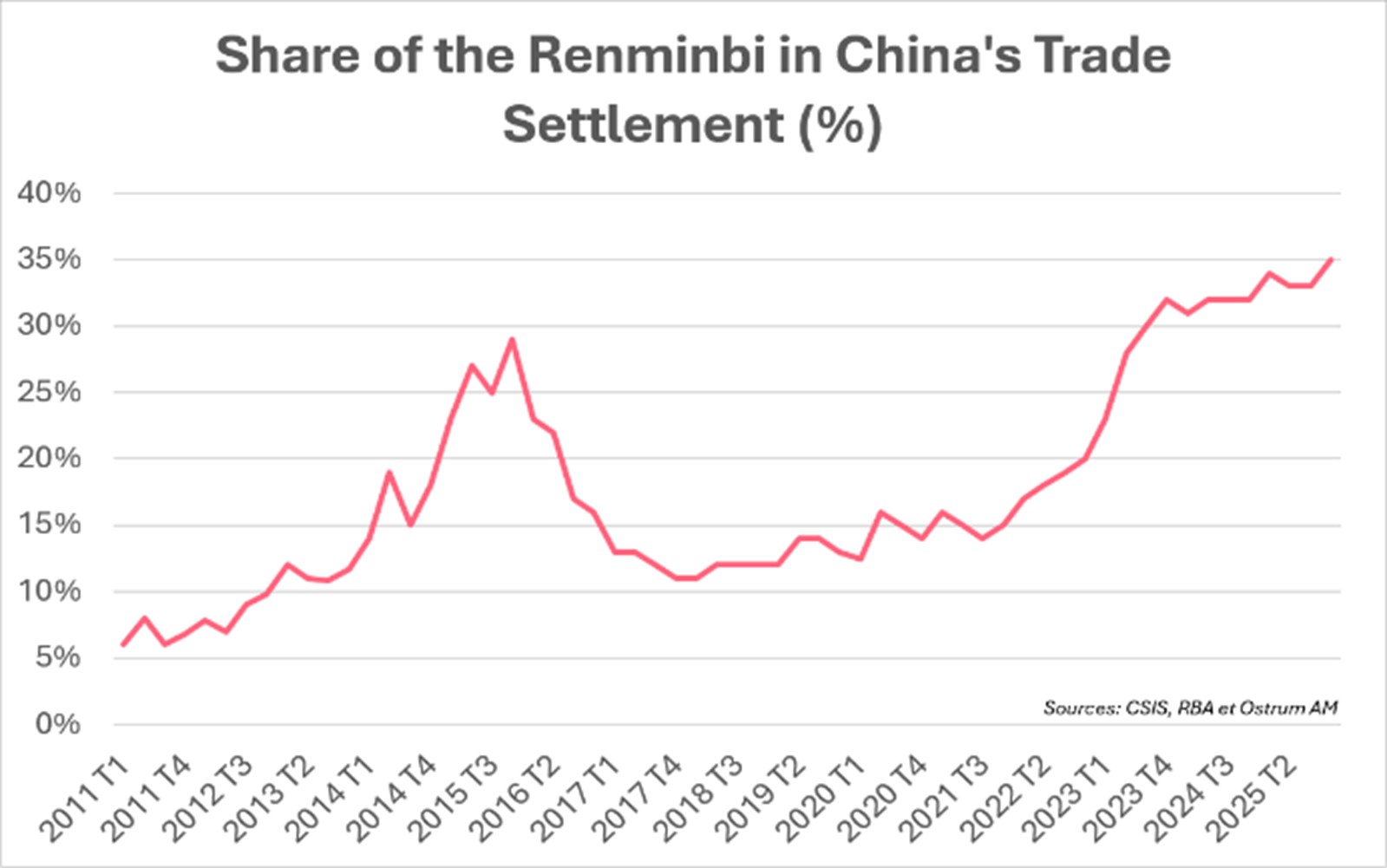
The share of China’s trade settled in renminbi has risen from less than 20% in 2021 to around 35% today.
In 2023, the renminbi overtook the US dollar to become the most widely used currency for China-related cross-border payments, as illustrated in the adjacent chart.
This progress has been supported by bilateral trade agreements, the expansion of payment infrastructure such as the Cross-Border Interbank Payment System (CIPS), China’s international payment network, and the growing network of offshore RMB clearing banks.
From Trade Settlement to International Financing
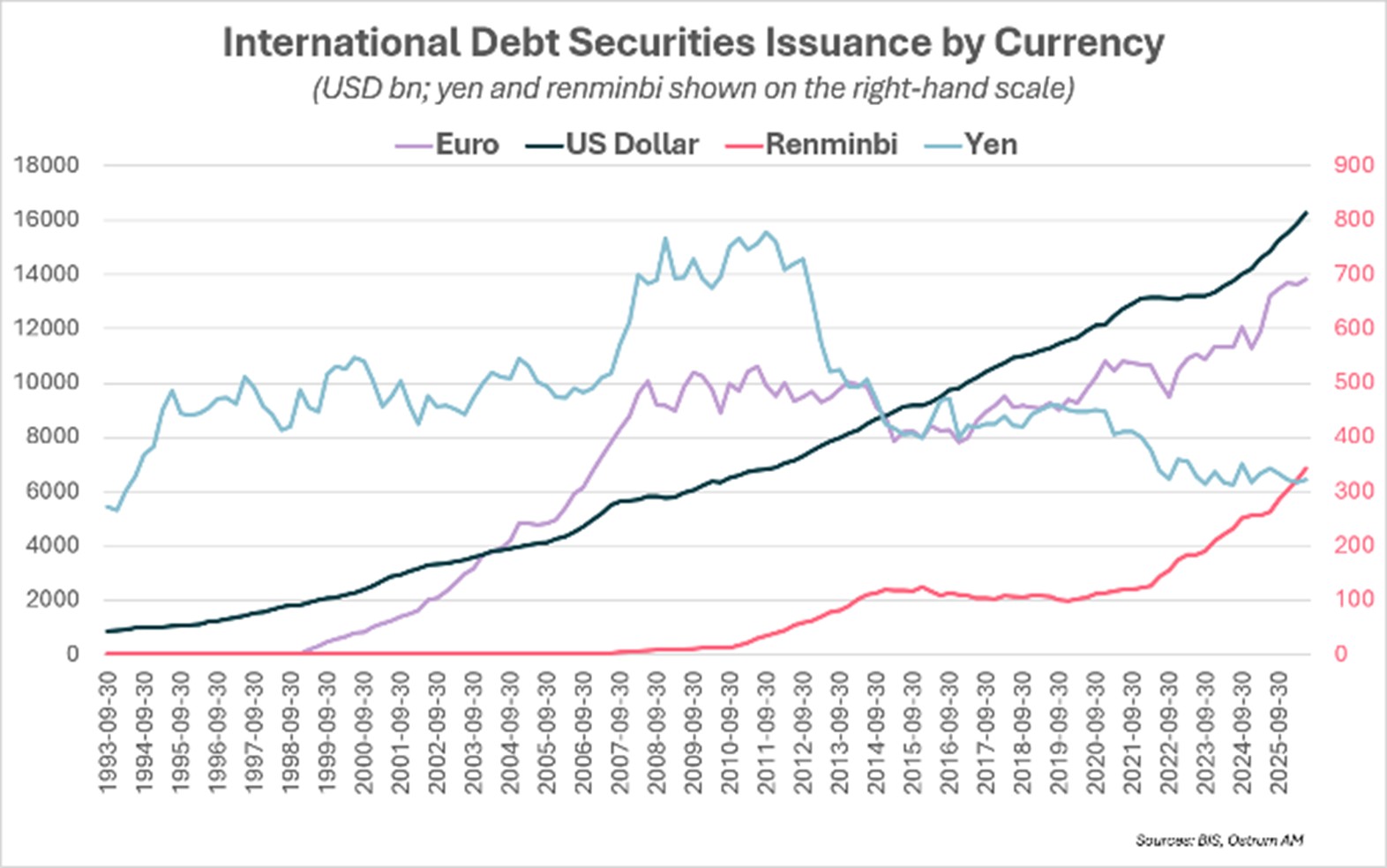
Beijing is now seeking to elevate the renminbi’s role from a currency primarily used for trade settlement to one increasingly employed for international financing and investment.
Despite recent advances, however, RMB-denominated debt still accounts for only around 1% of the global international bond market, broadly in line with the Japanese yen’s share, as shown in the chart above.
Against this backdrop, Beijing aims to leverage the rapid expansion of the Panda bond market (RMB-denominated bonds issued onshore in China by foreign entities) to accelerate the renminbi’s emergence as an international financing currency.
Panda Bonds: At the Core of the Renminbi’s New Phase of Internationalisation
… Building on the rapid expansion of the Panda and Dim Sum bond markets …
Panda bonds have become a key instrument in expanding the use of the renminbi in international financing.
Issued by foreign borrowers in China’s domestic bond market, Panda bonds have experienced rapid growth in recent years.
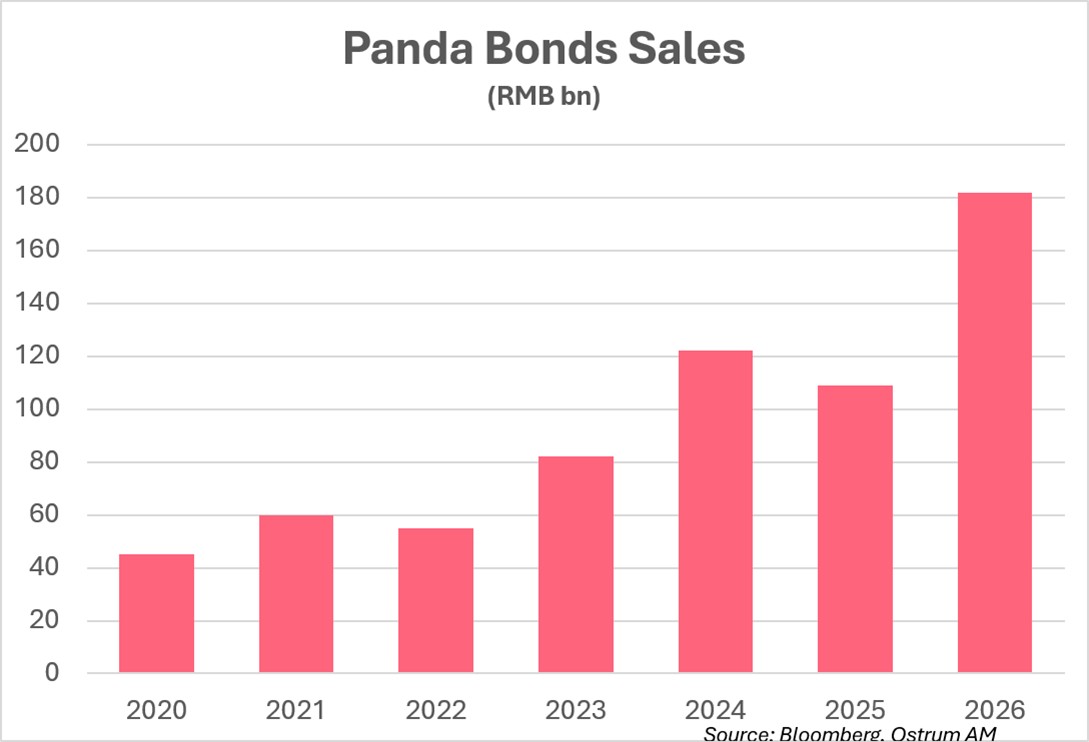
Issuance volumes have reached record highs, with cumulative issuance surpassing USD 180 billion by mid-August, representing an increase of more than 65% compared with 2025.
The market now attracts not only multinational corporations seeking to finance their activities in China, but also sovereign issuers and public-sector entities.
Alongside the Panda bond market, the offshore renminbi bond market, commonly known as the Dim Sum bond market, has also continued to expand at a rapid pace. Issuance has reached a record RMB 830 billion since the beginning of 2026, up more than 30% year-on-year.
The simultaneous development of these two markets is increasing the stock of renminbi-denominated financial assets available to international investors while facilitating the circulation of the currency beyond mainland China.
Panda bonds and Dim Sum bonds are not an end in themselves. Rather, they serve as vehicles for strengthening the renminbi’s presence in global investment portfolios and for fostering the development of an increasingly comprehensive renminbi yield curve.
Panda Bonds: A Mechanism Reminiscent of the One That Propelled the US Dollar in the Twentieth Century
Transforming Commercial Power into Financial Power
… Echoing the rise of the US dollar in the 1920s…
In the 1920s, the United States transformed its commercial dominance into financial leadership through the development of deep and liquid capital markets. This is precisely the transition that the renminbi is undergoing today. The rapid expansion of the Panda and Dim Sum bond markets is gradually turning the RMB from a trade settlement currency into a global financing and investment currency.
A Funding Cost Advantage
By 1929, New York had definitively overtaken London as the world's leading financial centre, supported by abundant liquidity and highly competitive financing conditions, while the United Kingdom faced economic stagnation. Today, the renminbi enjoys a similar funding cost advantage.
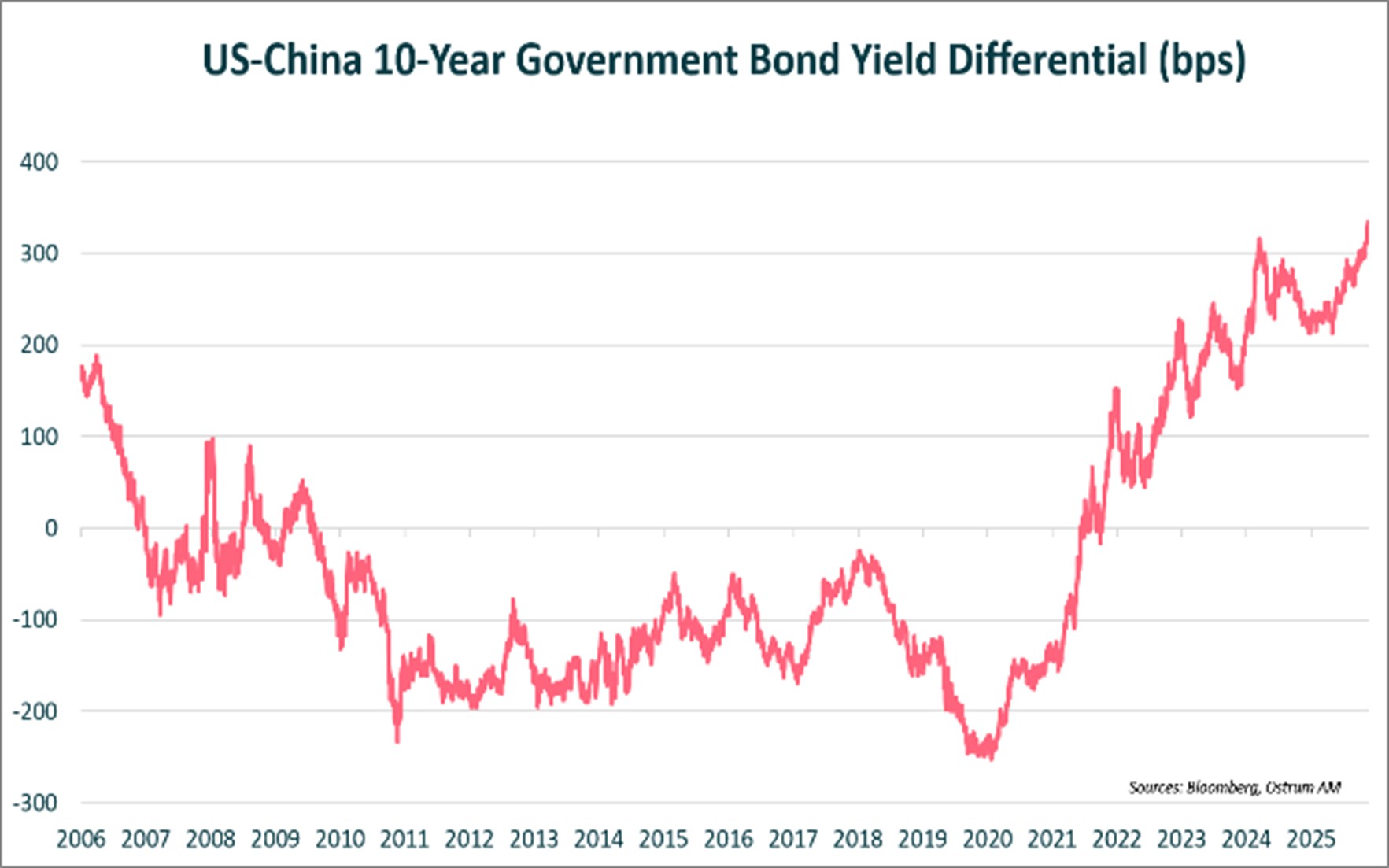
As shown in the adjacent chart, the spread between Chinese and US 10-year government bond yields now exceeds 300 basis points.
As a result, foreign borrowers can access RMB funding at rates that are sometimes below 2%, providing a strong incentive to tap the Panda bond market.
An Alternative to the US Dollar
… Yet Beijing is following a distinct path, seeking to internationalize the yuan through the gradual construction of a global RMB ecosystem …
In 1929, central banks and sovereign borrowers were increasingly looking for an alternative to the dominance of sterling. Similarly, Panda bonds are now meeting the demand of many countries, particularly emerging economies, to diversify their funding sources, especially as access to US dollar markets has become more challenging for some issuers.
Recent transactions by Indonesia (RMB 7 billion), Kazakhstan (RMB 6.6 billion) and Slovenia (RMB 4 billion), as well as Brazil’s plans to issue RMB 5 billion in Panda bonds, illustrate this growing trend.
Access to the Panda bond market remains largely confined to higher-quality issuers or those benefiting from strong institutional backing, notably from the International Monetary Fund (IMF). Kenya is currently in discussions with the Asian Infrastructure Investment Bank (AIIB) regarding a potential USD 500 million Panda bond issuance.
The appeal of the Panda bond market is therefore both financial and geopolitical, offering borrowers not only attractive funding conditions but also an opportunity to diversify away from traditional sources of capital.
A Different Path from the Dollar: China Is Building an International Financial Ecosystem Around the Renminbi
The US experience shows that the dollar became the world’s leading international currency through a combination of capital account openness, deep financial markets and the global integration of capital markets.
China is pursuing a different strategy. Rather than fully liberalising its capital account, Beijing is gradually building a comprehensive ecosystem around the renminbi, encompassing bond markets, offshore financial centres, payment infrastructure, investment channels and derivatives markets.
… And supported by Hong Kong’s emergence as the primary offshore hub for the renminbi …
The challenge for Chinese policymakers is to transform the cyclical demand for renminbi financing into a more durable demand for transactions, investment, hedging and reserve holdings. If successful, this strategy could significantly advance the internationalisation of the renminbi without requiring China to relinquish control over its financial system.
Hong Kong: The Cornerstone of China’s Financial Opening
The most visible illustration of this strategy is the development of the offshore renminbi market (CNH), primarily centered in Hong Kong. The coexistence of the onshore renminbi (CNY), which remains subject to capital controls, and the offshore renminbi (CNH), which is freely tradable, allows China to balance financial opening with domestic stability.
Chinese authorities are now seeking to further consolidate Hong Kong’s position as the leading offshore renminbi center (see chart).
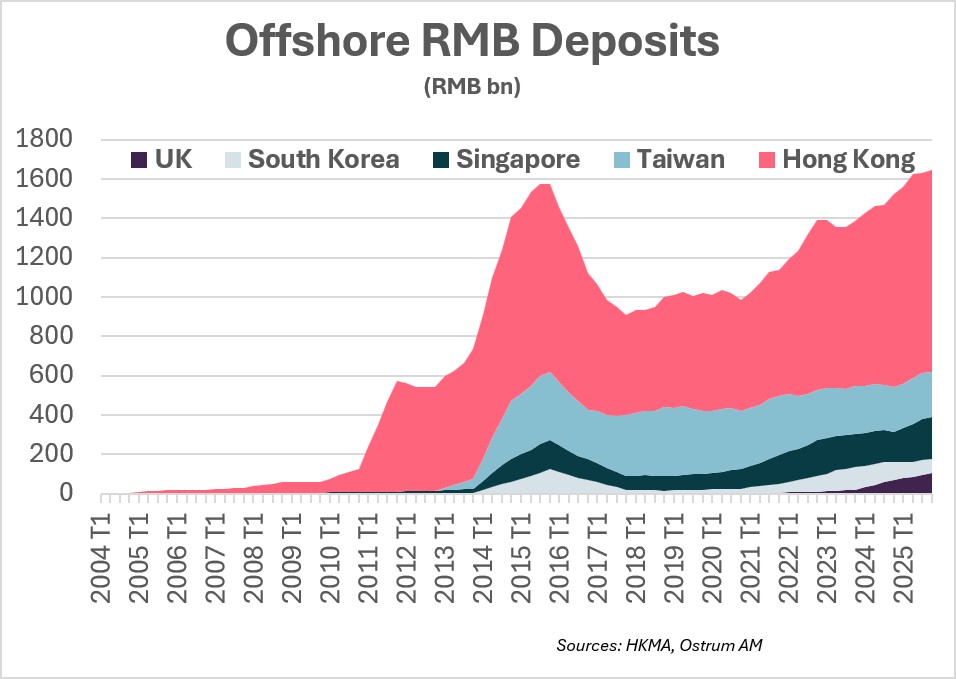
Renminbi deposits in Hong Kong reached nearly USD 1.03 trillion at end-2025, leaving it by far the largest offshore renminbi hub. At the same time, financial centers such as Taiwan, Singapore and the United Kingdom have gained prominence, reflecting the gradual diversification of the renminbi’s international ecosystem.
The Bond Connect and Southbound Connect programs are progressively strengthening the links between Chinese and international financial markets while maintaining a clear separation between onshore and offshore markets. By July 2026, Chinese financial institutions had invested nearly RMB 50 billion in offshore bonds through these two schemes.
This framework has enabled a broader international circulation of the renminbi without fully exposing the Chinese economy to speculative capital flows, which exerted significant pressure on the currency during the 2014-2016 episodes of financial stress.
Interest Rate Derivatives: The Missing Link
… As well as through the development of renminbi interest rate derivatives markets.
Monetary history shows that a currency does not become international simply because it is used to issue bonds. It must also be supported by deep and liquid financial markets that allow investors to manage risk efficiently.
This is why Beijing has increasingly prioritized the development of renminbi derivatives markets. Over recent years, the interest rate swap market has expanded rapidly, supported by the gradual opening of China’s financial markets to foreign investors and the launch of the Swap Connect program.
The decision in 2026 to allow qualified foreign investors to use Chinese government bond futures for hedging purposes marks another important milestone in this strategy. By expanding the range of available risk-management instruments, China aims to provide international investors with the same hedging tools that are available in the dollar and euro markets.
Green Panda Bonds: A New Lever of Financial Influence
Green Panda bonds provide an additional channel through which China is promoting the internationalization of the renminbi.
While global climate finance remains dominated by traditional US dollar and euro capital markets, China’s RMB-denominated bond market is emerging as a new source of funding for issuers seeking green, diversified and potentially lower-cost financing.
As of end-2025, cumulative issuance of green, social, sustainability and sustainability-linked (GSS+) Panda bonds had reached RMB 64.2 billion (USD 9.5 billion).
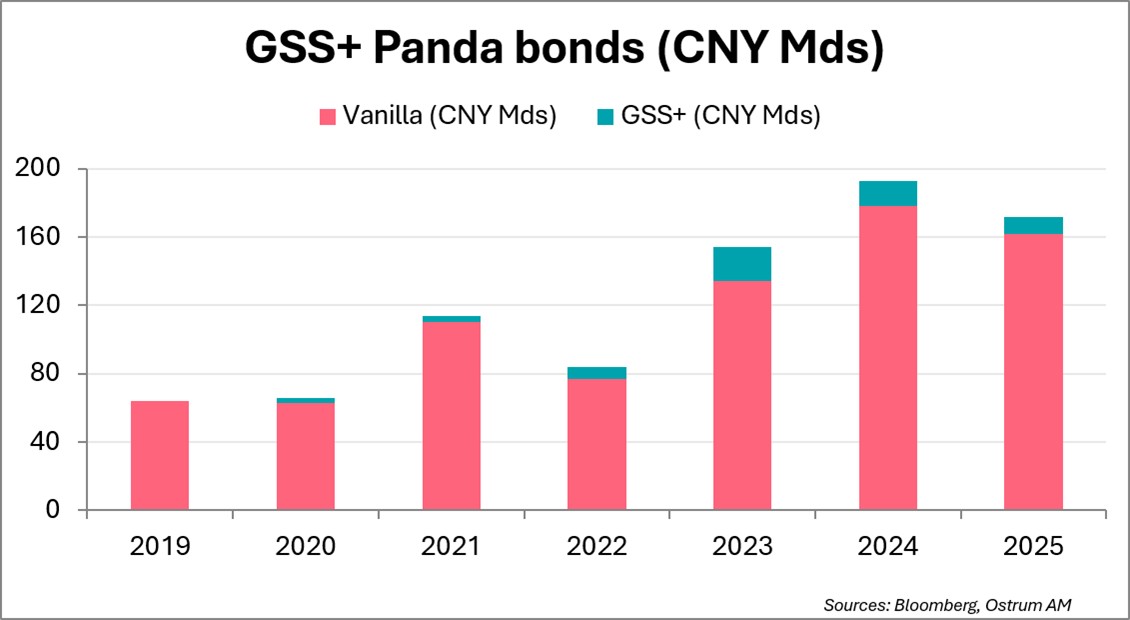
Growth has been steady since the launch of the first green Panda bonds in 2016. GSS+ instruments now account for approximately 6% of total Panda bond issuance, with green bonds representing around 60% of the market, followed by sustainability bonds at 30%. In 2025, GSS+ Panda bond issuance reached RMB 9.2 billion, making it the third strongest year on record for the segment.
A Potential Financing Tool for Developing Economies
The Panda bond market combines access to Chinese capital with China's leadership in renewable energy technologies, including solar power, batteries and electric vehicles. As such, it could provide developing economies with a cost-effective source of financing for green infrastructure, renewable energy projects and low-carbon transportation networks, particularly along the corridors of the Belt and Road Initiative (BRI).
Conclusion: A “Renminbi Moment” Rather Than a “Dollar Moment”
The expansion of the Panda bond market marks an important shift in the international role of the renminbi, which is gradually evolving from a trade settlement currency into a financing currency. Low RMB funding costs, borrowers’ desire to diversify their currency exposure, and increasing geopolitical fragmentation are all supporting this trend. At the same time, the development of Panda bonds, Green Panda bonds, Dim Sum bonds, Bond Connect, and the growing market for interest rate derivatives is contributing to the emergence of a comprehensive RMB-denominated financial ecosystem. For Beijing, the challenge is to transform cyclical demand for RMB funding into a more durable demand for RMB-based transactions, investment, hedging and reserve holdings. If successful, this strategy could significantly advance the internationalization of the renminbi without requiring China to relinquish control over its financial system. This is precisely what distinguishes the renminbi’s “moment” from the historical rise of the US dollar: rather than relying on full capital account liberalization, China is pursuing a gradual opening strategy built around the development of an international RMB ecosystem. This approach seeks to expand the global use of the renminbi while preserving domestic financial stability and policy autonomy.
Zouhoure Bousbih
Chart of the week
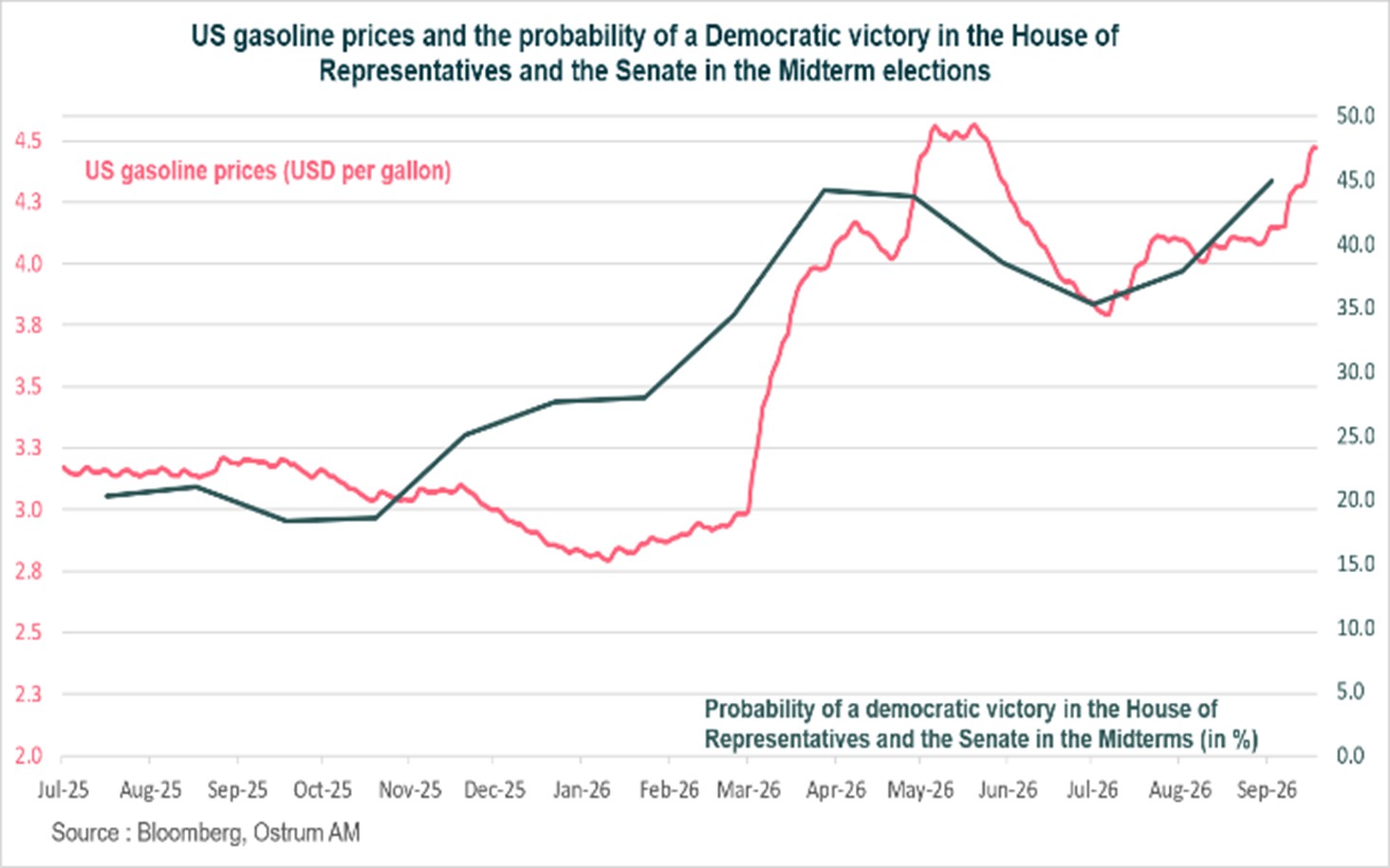
Historically, rising gasoline prices have been a political headwind for the party in power in the United States, given their direct impact on consumers’ purchasing power and inflation expectations. Since their July trough, gasoline prices have climbed by 18%, boosting the probability of a Democratic victory in both chambers of Congress, currently estimated at around 45%. Further increases in fuel prices ahead of the midterms could strengthen Democratic prospects, particularly in closely contested districts. Ironically, the White House incumbent, whose political narrative has often centered on lowering energy costs and protecting household purchasing power, now finds his party’s electoral chances undermined by the surge in crude oil prices triggered by the continuing conflict in the Middle East.
Figure of the week
5.4
France has revised its 2026 fiscal deficit forecast upward to 5.4% of GDP, exceeding the government's original 5.0% objective.
Market review: Warsh Delivers, BoJ Remains Enigmatic
- Fed: Fed hikes by 25 bps pour speed up disinflation towards the 2% goal;
- BoJ: 2 dissiteng votes cast doubt on the BoJ rate outlook, yen weakens;
- Bonds: T-note yield hover about 5%, Bund near 3.50%;
- France: 10-Yr OAT spreads above 100-bp threshold.
Market review: Warsh Delivers, BoJ Remains Enigmatic
Central bank meetings dominated the week's financial agenda. While Warsh did not disappoint markets, the tone of Ueda's remarks left considerable doubt over the intentions of Japan's monetary authorities. Yields nevertheless stabilized and equity markets regained momentum.
The monetary tightening cycle is broadening across developed economies. In line with the Jackson Hole message, the Fed has joined the movement initiated earlier this year by the RBA and subsequently the ECB in June. The price trend arguably justifies a further Fed move in December (towards 4.25%) following this unanimous rate hike. The BoJ also raised its rate by 25 basis points to 1.25%. However, two dissenting votes out of nine serve as a reminder of the BoJ's enduring caution and its persistent concern over excessive market volatility. By contrast, the Bank of England maintained a precarious status quo while adjusting its balance sheet policy to alleviate upward pressure on long-term Gilts.
On the activity front, the US economy appears to be experiencing an upturn. Retail sales rebounded (+1.4%) after July's contraction. Consumer credit (+$32bn over the past two months) continues to underpin household spending. Productive investment remains the primary source of growth, while temporary employment is gradually recovering. If the worst is probably behind us, the rise in long-term rates (30-year mortgage rate at 6.97%) does nothing to help the housing sector, which has been in severe recession for several years. In the eurozone, the final inflation reading came in at 3.2% in August. The key variable for monetary authorities will be the evolution of wages and core inflation, currently contained at 2.4%.
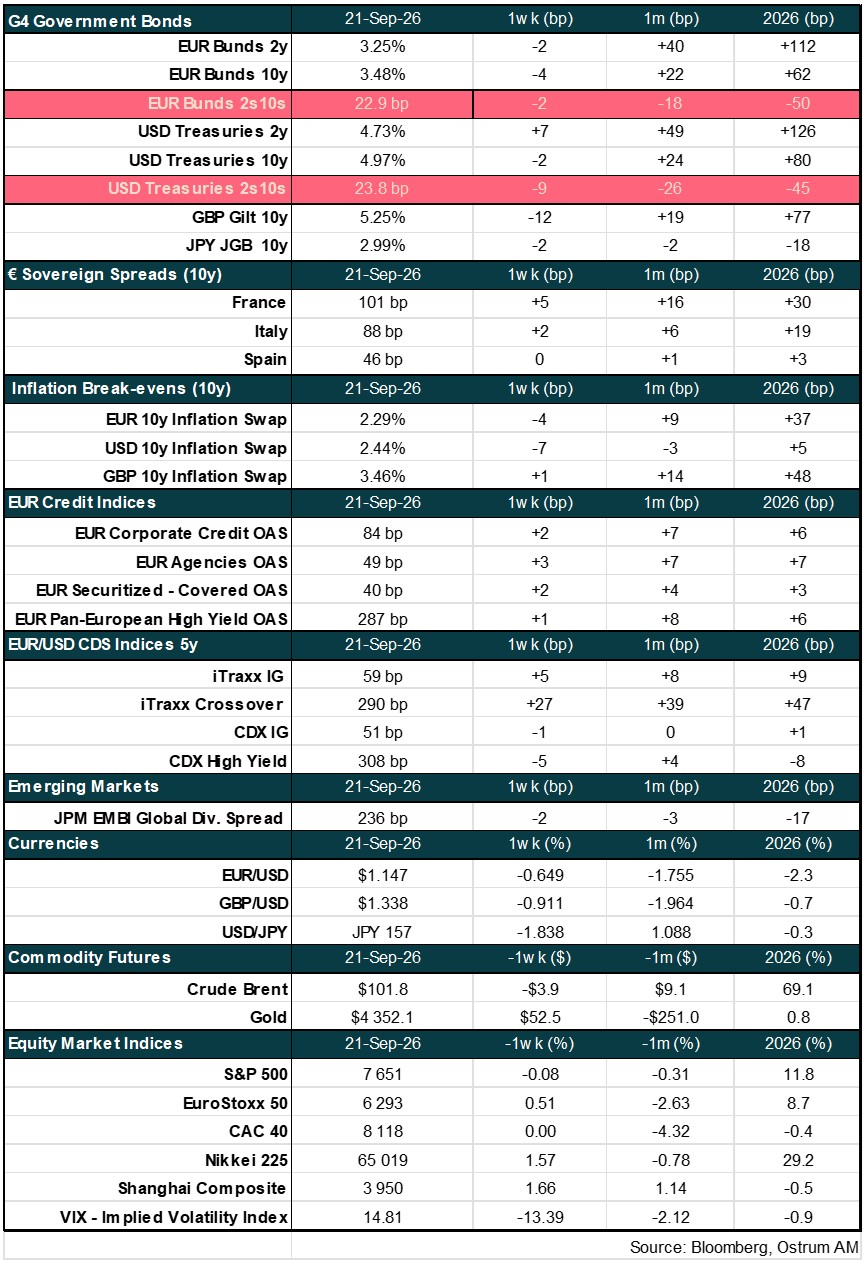
Market news continues to be dominated by the relentless rise in long-term yields. In the United States, expected real short-term rates have risen sharply, potentially reflecting hopes of higher growth potential or less favourable factors such as US credit risk or anticipated difficulty in durably containing inflation. The US 10-year should continue to oscillate around 5%. The 2-year appears to be pricing in a far more restrictive monetary policy scenario than the 18 FOMC members displaying their forecasts. That said, FOMC consensus points to a return to the inflation target... by 2029. The yield curve is flattening sharply. The eurozone is experiencing a similar dynamic, with markets projecting a deposit rate of 3.50% by mid-next year. The Bund (3.50%) is subject to Europe's heightened dependence on Gulf oil. Meanwhile, France is in the eye of the storm, with the 10-year OAT spread rising above 100 basis points. In Asia, the yen's renewed weakness leaves the question of capital repatriation entirely unresolved. Equities rebounded following central bank decisions. Earnings growth is solid, driven by a major contribution from energy companies. Implied volatility remains surprisingly low, also benefiting credit indices.
Axel Botte
Main market indicators
-

Axel Botte Head of markets strategy