

Read our market review and find out all about our theme of the week in MyStratWeekly and its podcast with our experts Axel Botte, Aline Goupil-Raguénès and Zouhoure Bousbih.
Listen to podcast (in French only)
(Listen to) Aline Goupil-Raguénès’ podcast:
- Review of the week – Resurgence of tensions in the Middle East, US inflation and housing market, ECB bank lending survey;
- Theme – The recovery and resilience facility enters its final phase.
Podcast slides (in French only)
Download the Podcast slides (in French only)Topic of the week: The Recovery and Resilience Facility Enters Its Final Phase
- Six years ago, at the height of the Covid-19 crisis, the European Council approved the European Recovery Plan;
- This landmark agreement enabled the European Commission to raise substantial funding on financial markets, while allowing Member States to benefit from grants and loans, provided they meet the investment and reform targets agreed with the Commission;
- The Recovery and Resilience Facility is set to expire at the end of the year. The European Commission has encouraged Member States to prioritize the use of grants and to streamline their Recovery and Resilience Plans in order to facilitate the achievement of agreed targets and milestones;
- The expiration of the RRF raises concerns about a funding gap from 2027 onwards for a number of projects, particularly in the Member States that have been the largest beneficiaries of the facility. According to the European Commission, this risk could be partially mitigated through the use of unspent EU funds, notably those available under Cohesion Policy;
- The success of the RRF has led the European Commission to draw inspiration from its model for several proposals under the EU’s 2028–2034 budget framework.
The Recovery and Resilience Facility Enters Its Final Phase
On 21 July 2020, at the height of the Covid-19 crisis, the European Council adopted the NextGenerationEU recovery plan. Member States reached a historic agreement by creating this European recovery fund and its flagship instrument, the Recovery and Resilience Facility (RRF). For the first time, the European Commission was empowered to raise substantial funding on financial markets, with a significant share of the resources distributed as grants and the remainder as loans. The RRF is now entering its final phase. All milestones and targets must be fulfilled by 31 August 2026, financing requests submitted to the European Commission by 30 September, and final disbursements completed by 31 December 2026. The end of the RRF raises concerns about potential funding shortfalls from 2027 onwards for certain projects, particularly in the Member States that have been the largest beneficiaries of the facility. According to the European Commission, this risk should be partly mitigated through greater use of other available EU funding instruments, notably those under Cohesion Policy.
A Historic Agreement
Six years ago, on 21 July 2020, the European Council adopted the NextGenerationEU recovery plan, creating a European recovery fund to address the economic shock caused by the Covid-19 pandemic. The initiative largely reflected proposals put forward a few months earlier by France and Germany. Member States that were most severely affected by the pandemic, particularly Spain and Italy, whose economies are more reliant on tourism, had limited fiscal room to respond given their already high levels of public debt. To avoid an overly uneven recovery across the European Union—which could have undermined growth in other Member States and generated both financial and political tensions—the EU27 agreed to establish a European recovery fund alongside the 2021–2027 Multiannual Financial Framework.
This agreement was historic in two respects. First, it empowered the European Commission, for the first time, to borrow on a large scale on behalf of all Member States. Between 2021 and 2026, the Commission was authorized to raise €750 billion in 2018 prices (around €800 billion in current prices), equivalent to roughly 6% of EU GDP in 2020, through the creation of NextGenerationEU. Second, a substantial share of the funds was allocated in the form of grants, which do not have to be repaid by beneficiary countries, while the remainder was provided as loans on favourable terms, benefiting from the European Union’s high credit rating.
Temporary, targeted and significant in scale, this agreement represented a major step forward for the European Union, strengthening solidarity and cooperation among Member States. It also marked progress toward the creation of a European safe asset, supported by the unprecedented volume of common debt issued by the European Commission.
The Recovery and Resilience Facility
The Recovery and Resilience Facility (RRF) is the flagship instrument of NextGenerationEU, with a total envelope of €577 billion, including €360 billion in grants and €217 billion in loans. The countries most severely affected by the Covid-19 crisis are the main beneficiaries. The allocation key is based, for 70% of the funding, on each country’s population, the inverse of GDP per capita, and the average unemployment rate over the 2015–2019 period relative to the EU average. For the remaining 30%, the unemployment criterion was replaced by the decline in real GDP recorded in 2020 and the cumulative loss of output over 2020–2021. In addition, governments may request loans of up to 6.8% of their 2019 Gross National Income (GNI), which must subsequently be repaid.
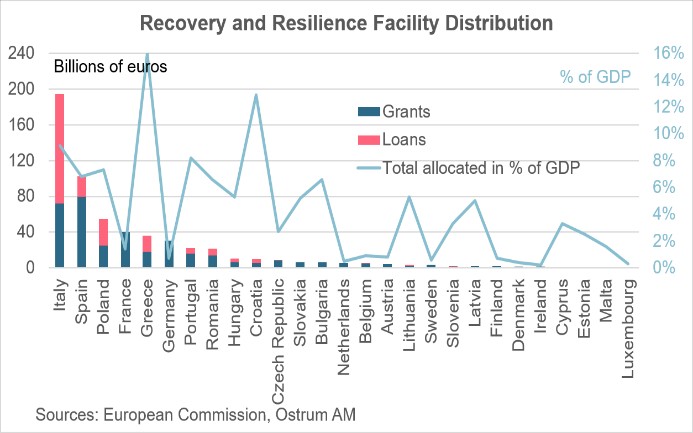
In absolute terms, Italy is the largest beneficiary, with €194 billion, followed by Spain with €103 billion. Relative to GDP, Greece ranks first with allocations amounting to 16% of GDP, followed by Croatia (12.9%), Italy (9.1%), Portugal (8.2%), Poland (7.3%), and Spain (6.8%).
Conditions for Receiving RRF Disbursements
In order to receive funding from the European Union, each government had to submit a Recovery and Resilience Plan (RRP) to the European Commission, meeting a number of requirements relating in particular to public investment and structural reforms.
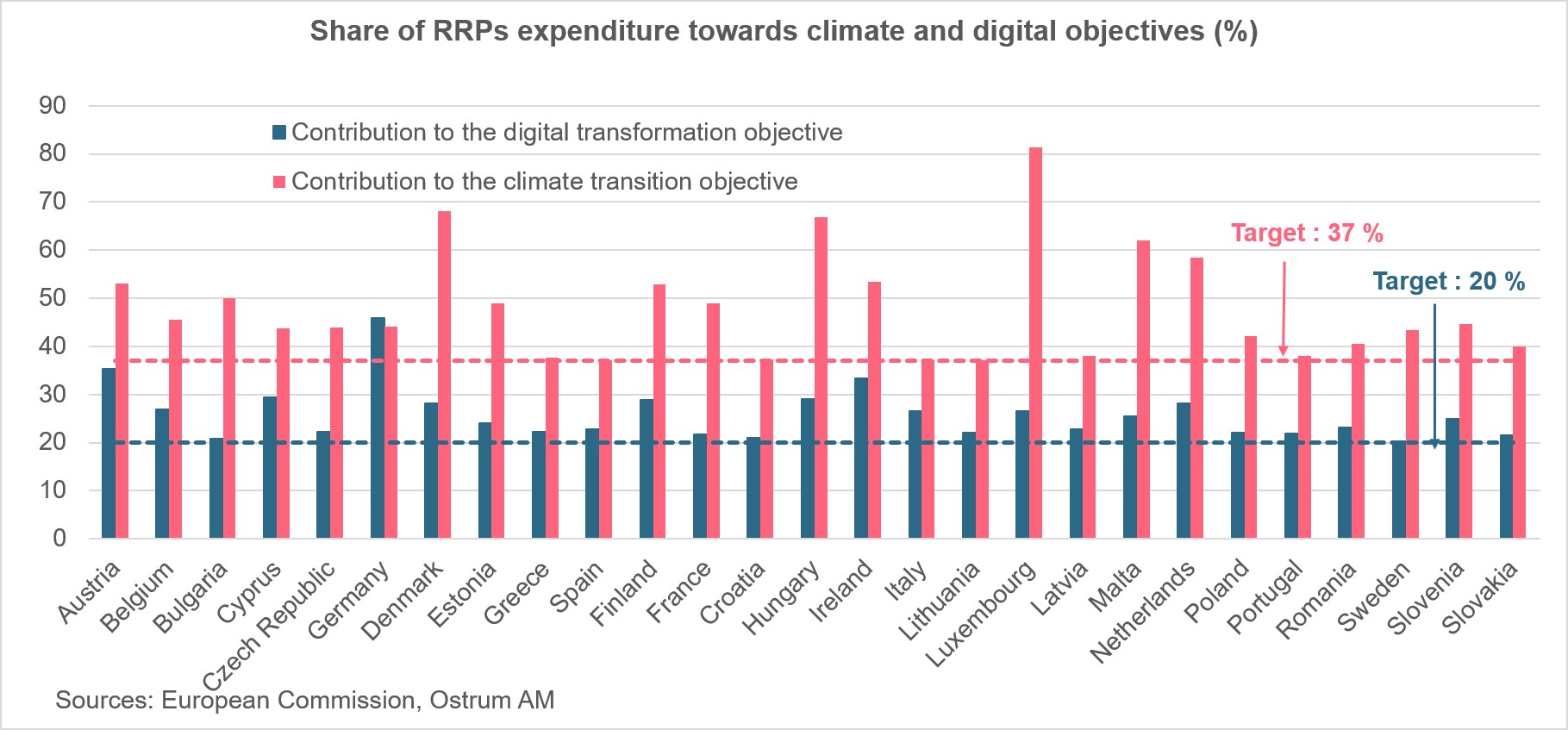
- At least 37% of expenditure must be dedicated to investments or reforms supporting the green transition;
- At least 20% of expenditure must be allocated to the digital transformation.
Overall, Member States have set climate and digital targets that exceed the minimum thresholds established by the European Commission. On average, spending aimed at accelerating the green transition accounts for 41% of RRF resources, while expenditure supporting the digital transformation represents 25% of the total allocation.
Where do we stand?
As of early June 2026, €260 billion in grants had been disbursed, representing 72% of the available amount. €166 billion in loans had also been paid out, equivalent to 77% of the total. In line with the recommendations issued by the European Commission last year, grant disbursements have accelerated. The Commission has asked Member States to prioritise the use of grants over loans, given that the program is set to expire on 31 December 2026.
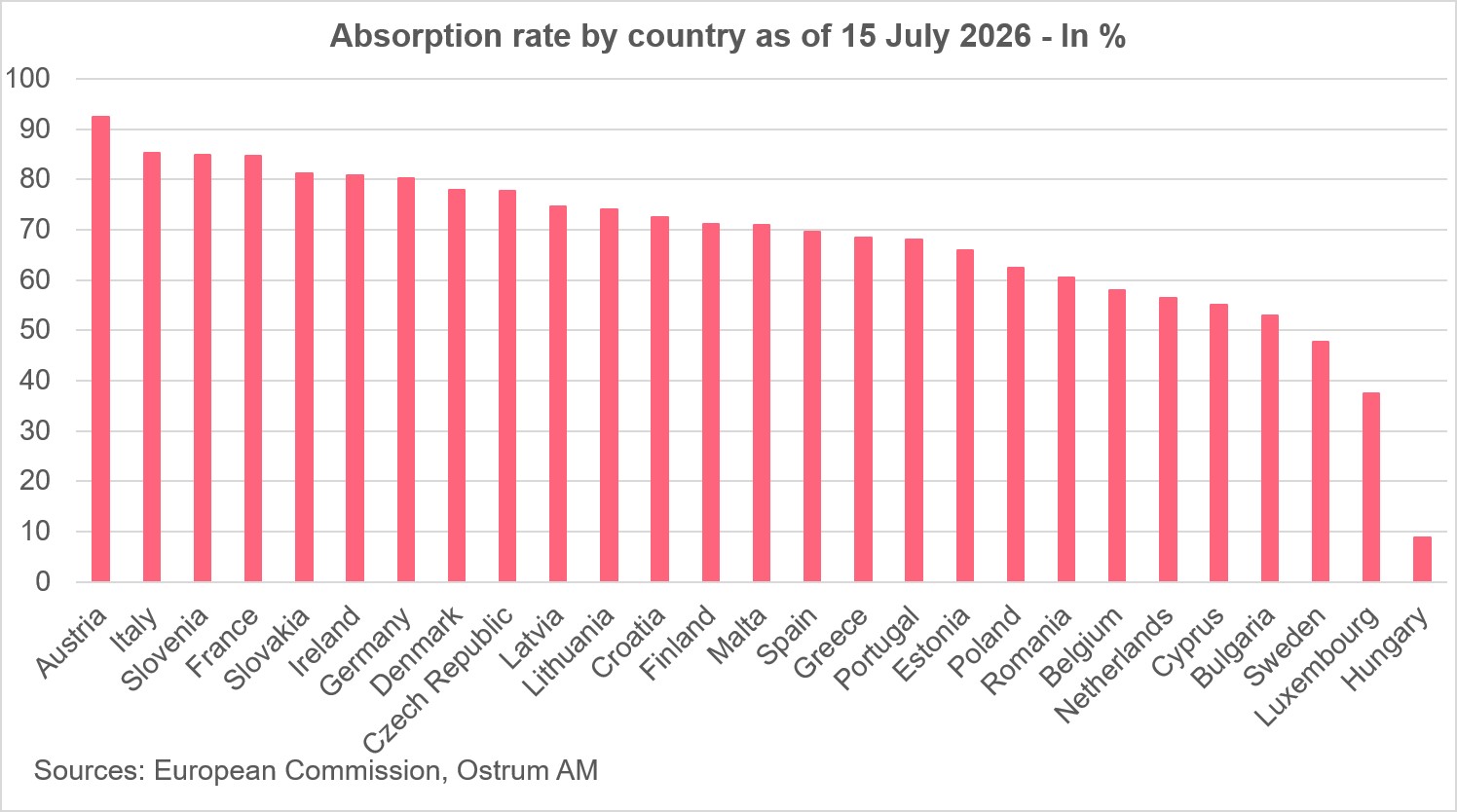
In terms of absorption rates, the vast majority of countries have received more than half of their allocated funds. Austria ranks first, with slightly more than 90%, followed by Italy, Slovenia and France, each at around 85%. Sweden, Luxembourg and Hungary are lagging behind.
In Hungary’s case, only pre-financing has been disbursed so far, due to a disagreement between the European Commission and the previous government, which had failed to comply with the rule of law requirements. Following her meeting with the new Hungarian Prime Minister on 29 May 2026, Ursula von der Leyen stated that the Commission was ready to unlock the €10 billion in RRF funds if the government adopted the necessary reforms and investments. Hungary has since amended its Recovery and Resilience Plan. However, the limited time remaining — with targets to be met by 31 August — makes the disbursement of part of these funds uncertain.
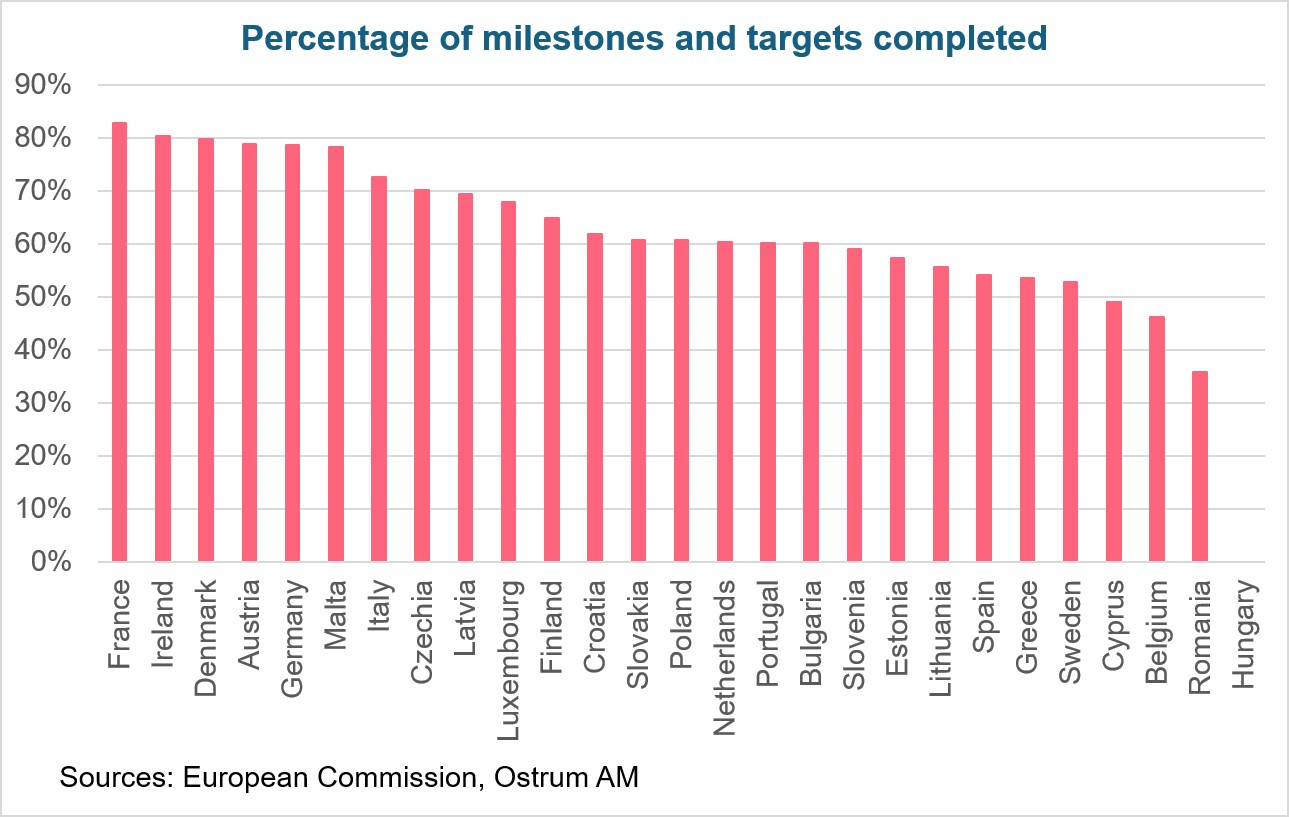
Most countries had achieved more than 50% of the milestones and targets set out in their Recovery and Resilience Plans by early June, with the exception of Cyprus, Belgium, Romania and Hungary. France is the most advanced, having met 83% of its objectives. Among the largest beneficiaries of RRF disbursements, Italy is the most advanced, with 72% of targets achieved, followed by Croatia (62%) and Poland (61%).
The RRF Enters the Final Stretch: Towards a Fiscal Cliff?
The NextGenerationEU program and its core component, the Recovery and Resilience Facility (RRF), are temporary instruments. The RRF is now entering its final phase: all milestones and targets must be achieved by 31 August 2026, allowing Member States to submit their final payment requests by 30 September 2026, with the last EU disbursements to be made before 31 December 2026.
To accelerate the implementation of the program, the European Commission has encouraged Member States to simplify their Recovery and Resilience Plans, making it easier to deliver reforms and investments and to meet the agreed milestones and targets within the required timeframe.
The expiry of the RRF has raised concerns about a significant funding gap—or “fiscal cliff”—for projects in several Member States. Since its launch on 21 February 2021, the facility has been a major source of financing for public investment and structural reforms across the European Union.
In its Spring Forecast, the European Commission expects the euro area fiscal stance to become broadly neutral in 2027, following a slightly expansionary stance in 2026, largely because of the end of RRF-related spending. Public investment is also projected to decline moderately as fewer projects benefit from RRF funding. RRF grants have contributed to a substantial increase in public investment, with government capital expenditure rising from 3.4% of GDP in 2019 to an estimated 4.6% of GDP in 2026. The Commission expects this ratio to fall only slightly, to 4.4% of GDP in 2027, remaining at a historically elevated level.
According to the Commission, some investments will continue beyond the formal end of the RRF. This is particularly the case for investment grants awarded to private companies under national recovery plans. While contracts must be signed and funds transferred in 2026, the underlying investments may still be implemented in 2027. Moreover, the reforms and investments financed by the RRF are expected to generate lasting benefits through higher productivity and increased potential growth.
The Commission also argues that the reduction in RRF-related funding should be partly offset by a greater use of other available EU resources, notably Cohesion Policy funds. As of 20 July 2026, only 27% of the €378 billion Cohesion Policy envelope had been disbursed to Member States under the current EU budget. In addition, public investment is expected to increase through higher defence spending and the possible use of the EU’s SAFE program to support part of this effort. Finally, public investment should be complemented by rising private-sector investment in the energy transition, climate-related projects, and defence industries.
The RRF Inspires the European Commission’s Proposals for the 2028–2034 EU Budget
The European Commission’s proposals for the next Multiannual Financial Framework (2028–2034) draw heavily on the experience and perceived success of the Recovery and Resilience Facility (RRF).
One of the main innovations is the creation of National and Regional Partnership Plans. For the first time, each Member State would prepare a single comprehensive plan covering all relevant EU funding programs. This would replace the current system of separate programs for cohesion policy, agriculture, fisheries, migration and security.
Member States and regions would work jointly with the European Commission to design integrated plans combining investments and reforms. Funding would be released only after approval of the plans by both the European Commission and the Council, and would remain conditional on the achievement of agreed milestones and targets. This proposal is directly inspired by the RRF model, under which financial support is linked to the implementation of reforms and investments.
The Commission has also proposed the creation of a new €150 billion loan instrument, financed through common EU borrowing and backed by the EU budget. Named Catalyst Europe, this initiative would support strategic European investments in defence, energy infrastructure and critical technologies.
Conclusion
While it is still too early to fully assess the overall effectiveness of the Recovery and Resilience Facility (RRF), it has already contributed to a significant increase in public investment as a share of GDP and has accelerated the implementation of structural reforms aimed at boosting long-term growth. Its perceived success has led the European Commission to draw on the RRF model in several proposals for the 2028–2034 EU budget framework.
Aline Goupil-Raguénès
Chart of the week
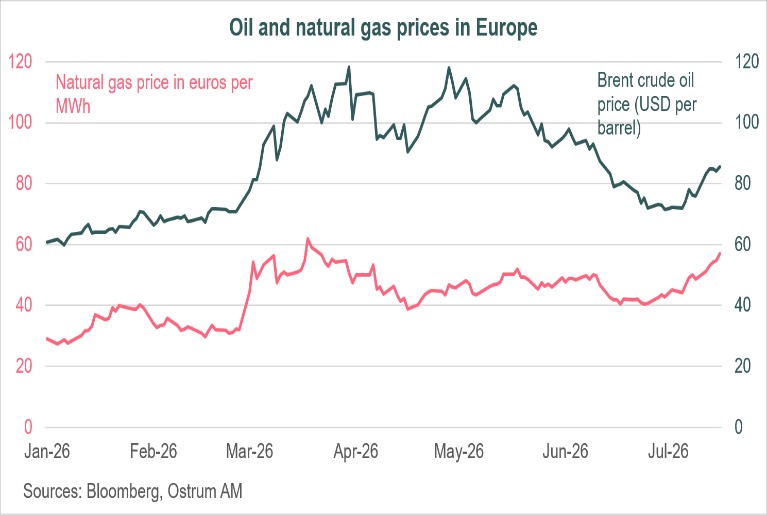
The resumption of strikes between Iran and the United States, together with the closure of the Strait of Hormuz, triggered a rebound in energy prices. Brent crude oil rose from USD 72 per barrel in early July to USD 88 per barrel. However, it remains well below the USD 120 per barrel peak reached in early May. Meanwhile, European natural gas prices increased from EUR 40/MWh at the end of June to EUR 57/MWh, approaching the highs recorded during the Middle East conflict last March. This comes at a time when gas storage facilities are only 53% full, significantly below both last year's level (64%) and the 2019–2025 average (72%). Should tensions persist for some time, there is a risk of intensified competition between Asia and Europe for liquefied natural gas (LNG) cargoes as temperatures decline. This could lead to a much sharper increase in natural gas and electricity prices.
Figure of the week
125
France will need to deliver €125 billion in fiscal adjustment measures by the end of the next presidential term (2032) in order to stabilize its public debt-to-GDP ratio.
Market review: Renewed Middle East Tensions and Lower-than-Expected US Inflation
- Oil: Crude prices rebounded following the resumption of hostilities in the Strait of Hormuz;
- U.S. economy : CPI inflation and producer prices came in lower than expected;
- Bonds: Divergence between US and European yields, with a flattening of the German yield curve;
- Equities: Semiconductor stocks recorded their worst weekly performance since "Liberation Day".
Renewed Middle East Tensions and Lower-than-Expected US Inflation
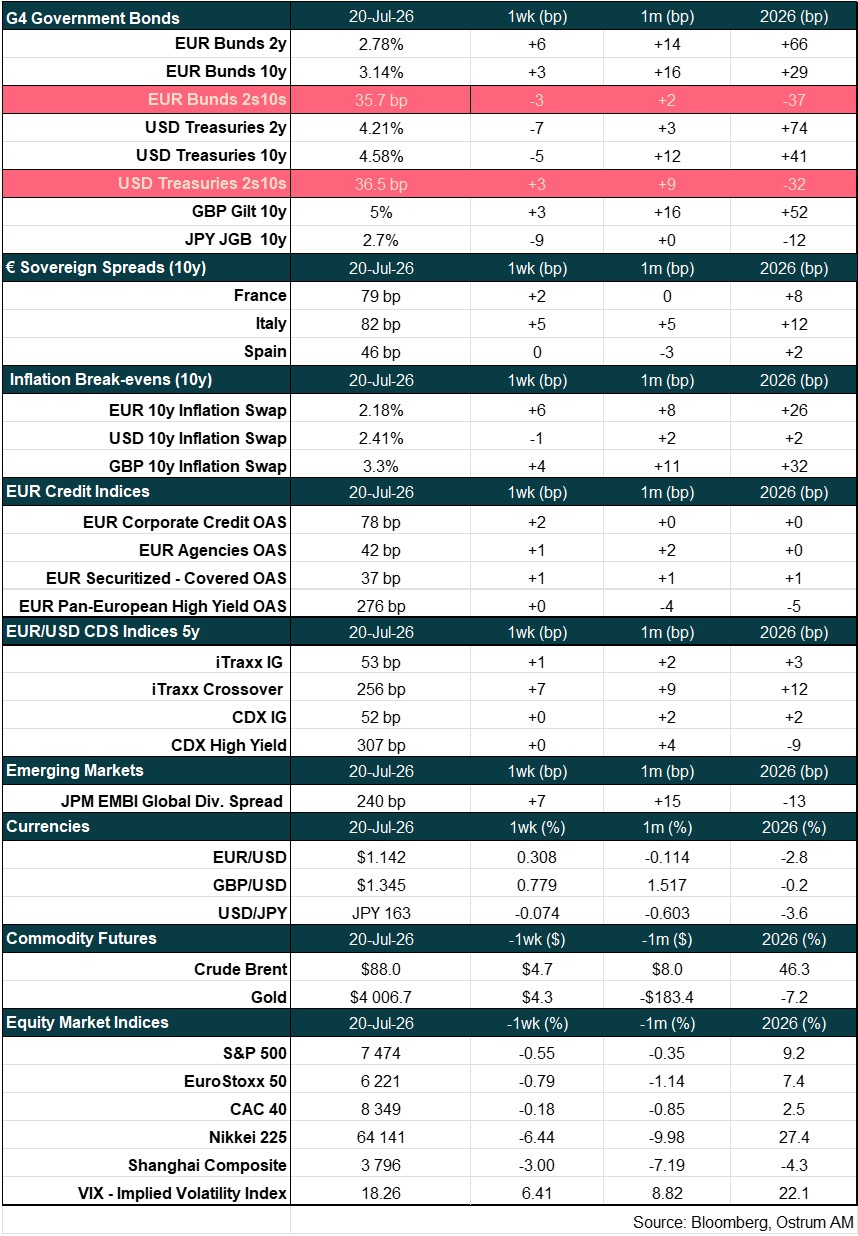
Renewed hostilities between the United States and Iran triggered a rebound in oil prices. As a result, European bond yields moved higher, while US Treasury yields declined in response to softer-than-expected inflation data. Equity markets were weighed down by the semiconductor sector, which recorded its worst weekly performance since “Liberation Day.”
The week was marked by renewed tensions between the United States and Iran over control of the Strait of Hormuz, bringing the ceasefire to an end and resulting in the closure of the waterway. President Donald Trump threatened to broaden US strikes to include Iranian bridges and power plants unless Iran returned to the negotiating table. In response, Iran reportedly instructed the Houthis to prepare to close the Bab el-Mandeb Strait in the Red Sea, another critical shipping route for global oil trade. The risk of further escalation in the coming days remains significant. As a result, Brent crude oil rebounded sharply, rising from around USD 72 per barrel following the signing of the memorandum of understanding to USD 88.1 per barrel at the end of the week.
On the data front, US inflation was the main focus for markets. Headline CPI came in below expectations, slowing to 3.5% year-on-year in June from 4.2% in May, while core inflation eased to 2.6% from 2.9%. The improvement was largely driven by an almost 10% decline in gasoline prices during the month. US retail sales were broadly in line with expectations, increasing by 0.2% month-on-month in June following a 1.0% rise in May. By contrast, the NAHB homebuilder sentiment index fell slightly to 34 in July from 35, remaining well below the neutral threshold of 50. In the euro area, inflation was confirmed at 2.8% in June. In China, growth slowed to 4.3% year-on-year in Q2, down from 5.0% in Q1, driven by exports who remained strong, increasing by 27% year-on-year in June.
As a net importer of energy, Europe is particularly sensitive to fluctuations in oil and gas prices. The rebound in energy prices pushed European yields higher, with the German 2-year yield rising 14 basis points over the week as investors priced in higher inflation expectations and an increased likelihood of further ECB rate hikes. The German 10-year yield rose 6 basis points to 3.13%. In contrast, US Treasury yields moved lower (-3 bps for the 2-year and -1 bp for the 10-year) as markets welcomed the softer inflation data and were reassured by Kevin Warsh’s commitment to preserving price stability and maintaining the Federal Reserve’s independence. In Japan, the 10-year government bond yield declined 9 basis points to 2.7%, reflecting stronger political pressure on domestic pension funds to increase purchases of Japanese assets. Against this more risk-averse backdrop, euro area sovereign spreads widened, driven not only by geopolitical tensions but also by fiscal concerns in France and renewed disagreements within Italy’s governing coalition. The Japanese yen remained near its weakest level in forty years, prompting Japan’s Finance Minister to reiterate the possibility of foreign-exchange intervention. Credit spreads showed little change overall. Equity markets, however, came under pressure. Investors intensified profit-taking in semiconductor stocks following their strong gains in recent months, leading the sector to post its worst weekly performance since “Liberation Day.”
Aline Goupil-Raguénès
Marchés financiers
-

Axel Botte Head of markets strategy
-

Aline Goupil-Raguénès Developed countries strategist